

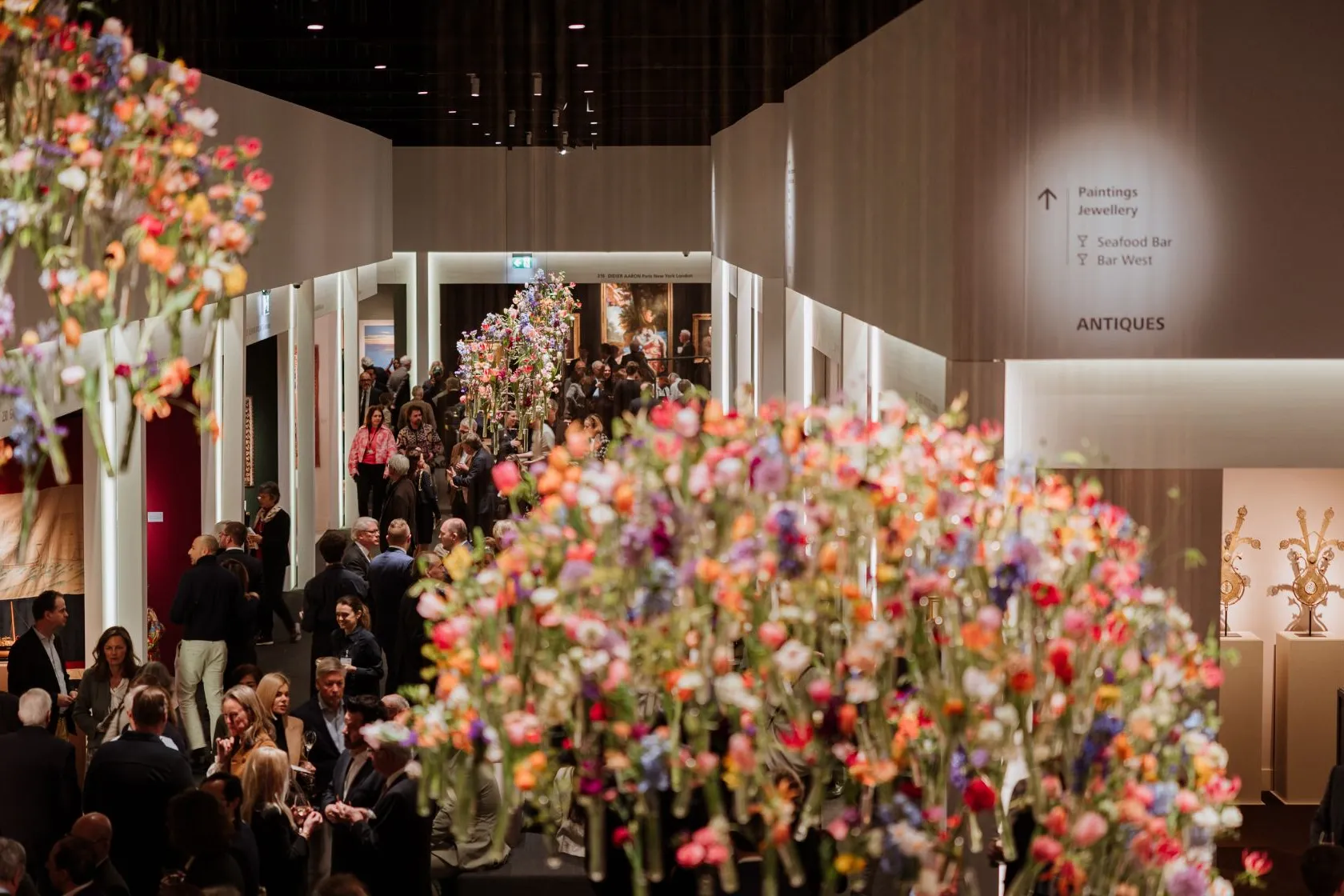
On March 12–13, Altiqa’s Art Advisory team attended the opening of TEFAF Maastricht, one of the world’s most important art fairs in terms of quality and diversity, transforming each year the elegant Dutch city into a central hub of the global art market.
Behind the fair’s refined and understated atmosphere frequented by a highly international and selective audience lies a landscape of complex and often prolonged negotiations, particularly when museums are involved. Yet, from the very first days, clear signals emerged: multi-million sales and the appearance of the iconic red dots marking works already acquired.
This year’s edition follows a particularly dynamic market phase, supported by strong results from the London auction week earlier in the month, which despite a context of global uncertainty confirmed the resilience of the market, especially for 20th-century art.
With nearly 300 participating galleries, the fair offers an exceptionally broad panorama: from modern and contemporary art which represents a significant portion of the offering to Old Master paintings and a wide range of collectible objects spanning cultures and time periods, from prehistory to the last century.
It is precisely this breadth of offering, combined with a rigorous vetting system, that makes TEFAF Maastricht an essential destination for major international collectors.
For Art Advisory professionals, the fair represents a key moment not only to observe evolving market dynamics, but also to identify relevant works, guide clients in shaping their collecting vision, and support acquisition decisions.
Contrary to common perception, the offering is not limited to multi-million masterpieces: alongside top-tier works, it is possible to find highly interesting pieces starting from tens of thousands of euros.
Among the highlights, two works by Alberto Burri stood out: a rare large-scale “Sacco e Rosso,” priced above €4 million, and a smaller composition available below €200,000.
A wide selection of tapestries by Alighiero Boetti ranged from more accessible pieces to significant “Mappe” works with multi-million valuations.
There was also a strong presence of Lucio Fontana, from his iconic slashed canvases to post-war ceramics, alongside major international movements from Wassily Kandinsky’s abstraction to the Bauhaus language of Paul Klee, and the surrealism of Joan Miró and Salvador Dalí with works ranging from pieces on paper to multi-million canvases, alongside the ever-present Pablo Picasso.
The Old Masters sector also saw significant sales, including a portrait attributed to a pupil of Rembrandt, while particular attention was drawn to a “Salvator Mundi” of Leonardesque origin, echoing the famous work by Leonardo da Vinci that achieved a record-breaking auction result.
Some galleries stood out for their ability to create dialogues between periods, juxtaposing Old Masters with modern and contemporary works.
Perhaps most intriguing, however, were the more specialized sections, where rare and unexpected objects revealed stories spanning centuries and geographies.
In such a rich and diverse environment, it becomes almost inevitable to encounter works capable of sparking genuine interest and passion.
This is the deeper value of an experience like TEFAF Maastricht: not only to acquire, but to understand, to choose with awareness, and ultimately to become custodians of culture.